Filling gaps, or drawing a line where nothing grows, using follicles taken from the back of the scalp.
A beard that grows in patches, cheeks that stay bare while the chin fills in, a scar that breaks the line: the beard has become part of how a man looks, and its absence is noticed all the more.
These irregularities are most often genetic — the density of facial follicles varies a great deal from one person, and one family, to another. They can also follow acne scarring, the scar of an injury, or localised alopecia.
Transplanted hairs come from the scalp. They keep its growth rhythm: they grow longer than an original beard hair and need regular trimming. This is worth knowing before deciding, not because it is a drawback, but because it is part of the upkeep.
Follicles are taken from the back of the scalp, from the same occipital area as for a hair transplant, where they are genetically programmed not to fall. They are then implanted one by one into the areas to be filled in.
The work is more demanding than on the head: on the face, hair grows at a very shallow angle, almost lying against the skin, and that angle changes from region to region — cheek, jaw, chin, upper lip. Whether the result looks natural rests entirely on respecting those directions.
Two distinct requests come up. Filling gaps in an existing beard, first: the work is then to restore an even density. Creating a line where nothing grows, second: here the shape has to be drawn, taking the proportions of the face into account.
In both cases, the shape is agreed with you before the procedure.
The consultation is where we assess the donor area, the number of grafts needed and the shape that can be considered.
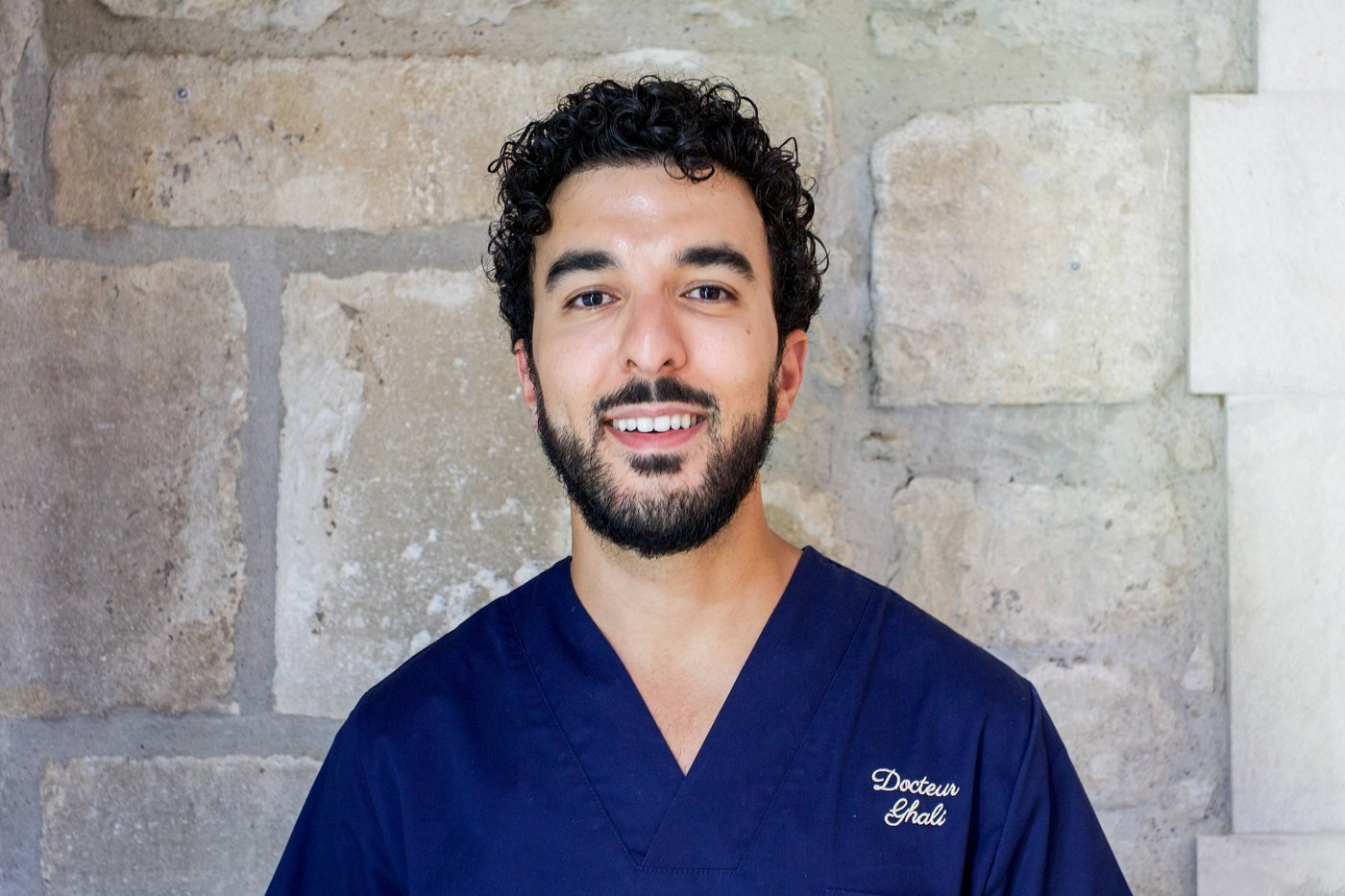
Aesthetic medicine and laser — Saint-Rémy-de-Provence. Registered with the French Medical Council (Ordre des médecins).
Page last reviewed 16 September 2026.
The consultation is there to examine your situation, check that there is no contraindication, and tell you whether these techniques are the right answer to what you are asking for.