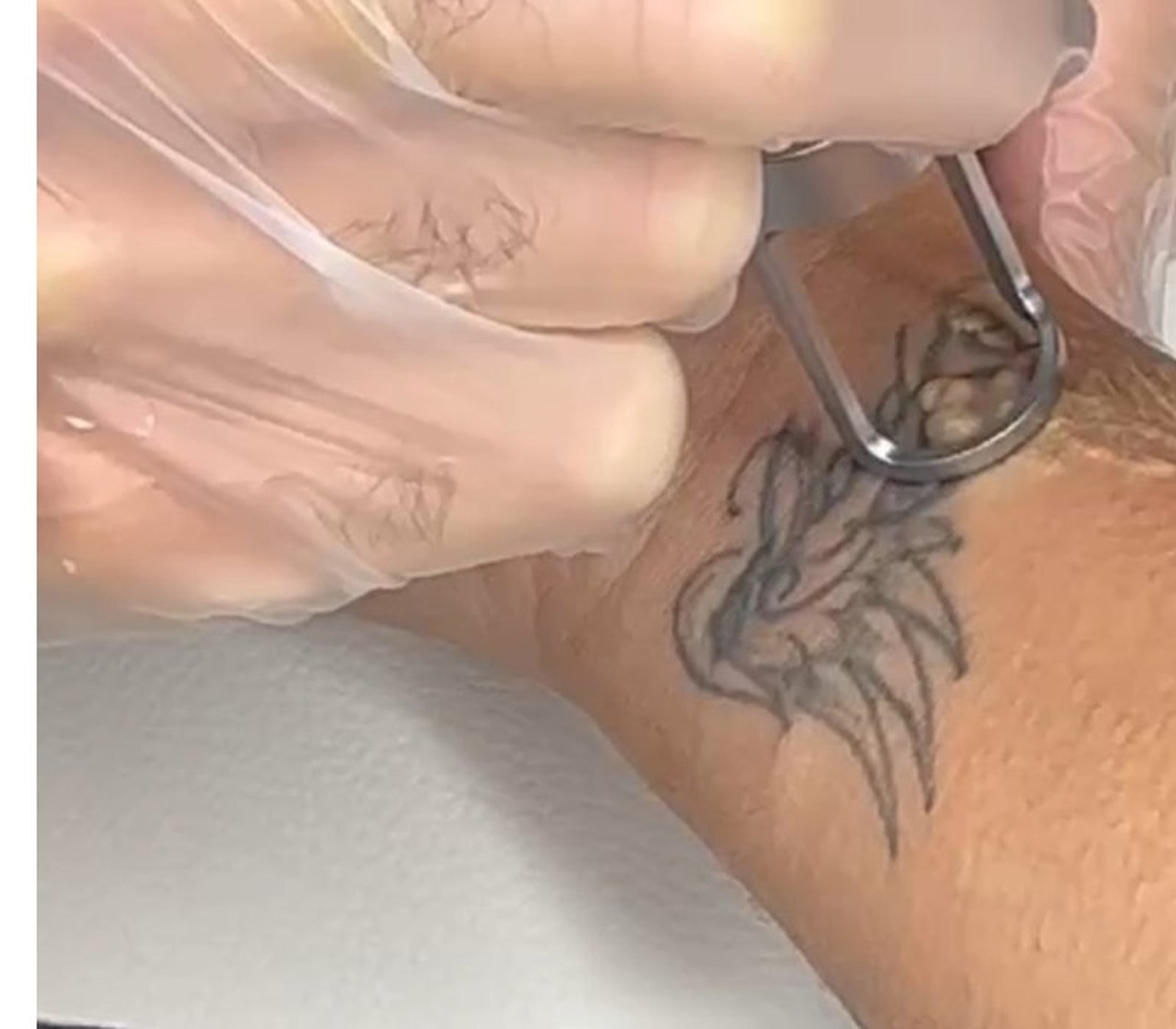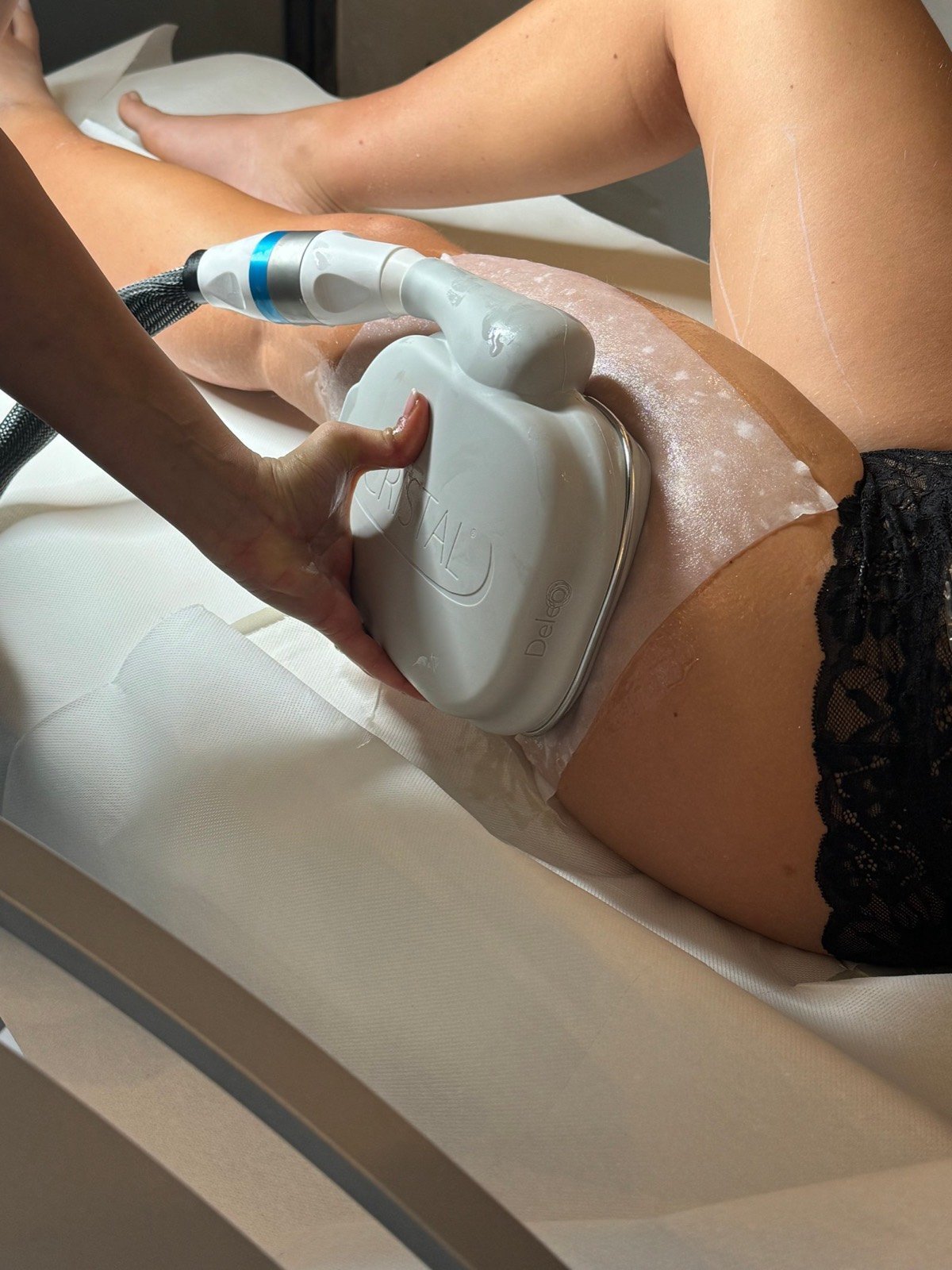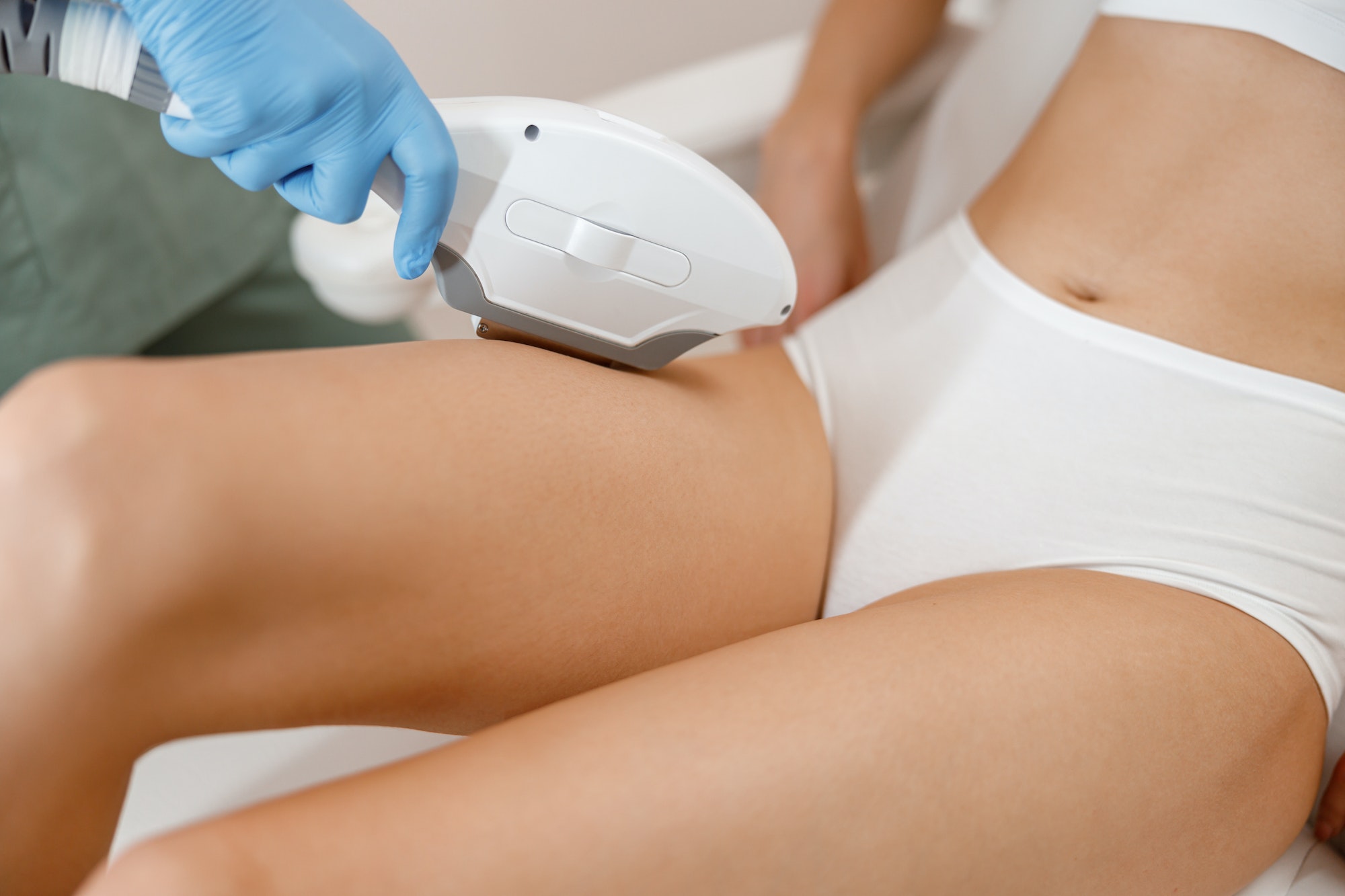
The laser breaks the pigment into fragments, which the body then clears. Several sessions, spaced apart, are needed.
A tattoo belongs to a moment in a life. Tastes change, and so do circumstances — a first name, a design from one’s youth, a piece that was poorly done can end up weighing on you, and you owe no one an explanation for that.
Laser can fade it away gradually, without surgery.
About colours. Dark inks — black, navy blue — generally respond better. Some colours, greens and yellows in particular, are harder to clear and may leave a residual trace. Complete removal therefore cannot be guaranteed, and that is something to be said before starting, not after.
Tattoo ink is made of pigment laid down in the dermis, too large for the body to carry away. The laser delivers very short pulses that break this pigment into particles fine enough for the immune system to take up and clear naturally, over the following weeks.
The beam targets the pigment and spares the skin around it: that is what sets this method apart from abrasive techniques.
Several sessions are needed, spaced weeks apart to give the body time to clear the fragmented pigment. The exact number cannot be announced in advance: it depends on the age of the tattoo, the depth and density of the ink, the colours used, the area of the body, and whether it was done by a professional or not.
The consultation is where we examine the tattoo, estimate the number of sessions, make sure nothing rules the treatment out, and tell you honestly what is achievable.
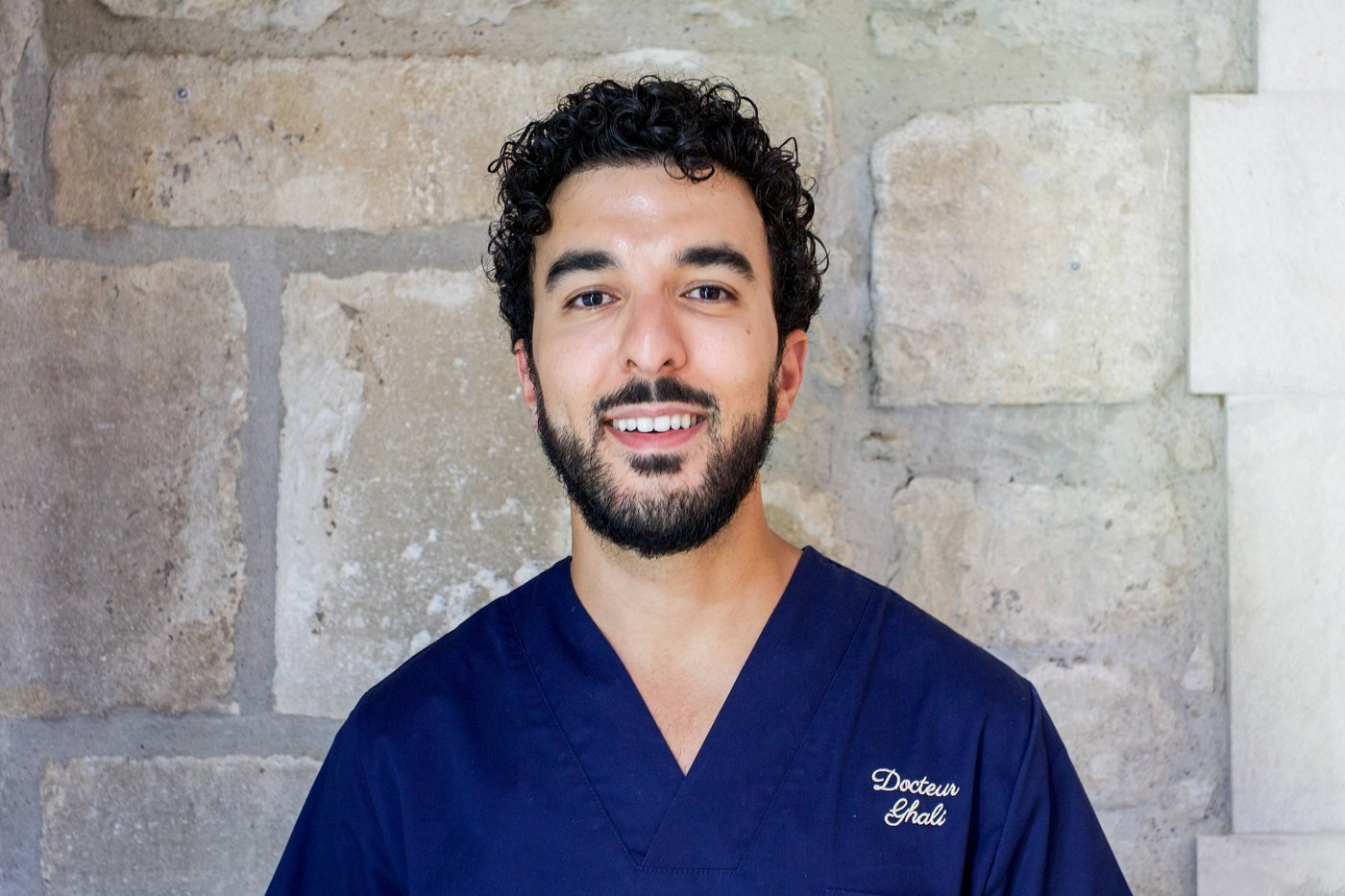
Aesthetic medicine and laser — Saint-Rémy-de-Provence. Registered with the French Medical Council (Ordre des médecins).
Page last reviewed 16 September 2026.
The consultation is there to examine your situation, check that there is no contraindication, and tell you whether these techniques are the right answer to what you are asking for.