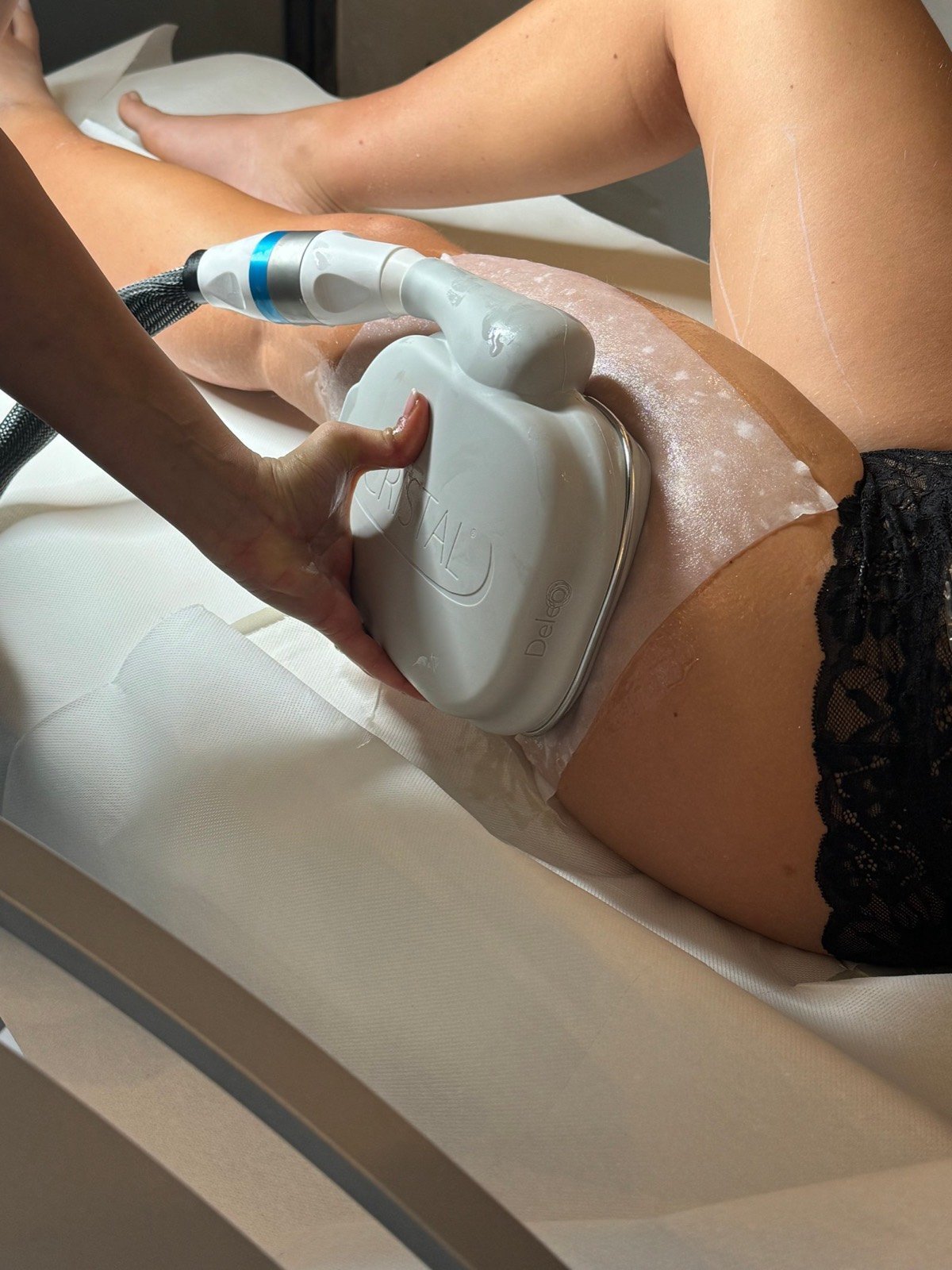
Two techniques offer lasting reduction, and they do not address the same kind of hair.
Hair growth can simply be a nuisance — shaving every day, waxing every month, ingrown hairs that keep coming back. It can also be genuinely hard to live with, on the face in particular.
New hair growth deserves an opinion before any aesthetic treatment. In a woman, hair appearing quickly in a male pattern — face, chest, along the midline — may have a hormonal cause that needs to be looked for and treated. In that case, hair removal only addresses the consequence. The consultation is also there to make that distinction.
The laser is absorbed by melanin, the pigment that gives hair its colour. That energy becomes heat, which destroys the follicle. This one mechanism explains two things.
First, contrast matters: the darker the hair against the skin, the better the laser works. Second, only hairs in their growing phase are destroyed — and they are not all in that phase at the same time. Hence the need for successive sessions, spaced apart, to catch each hair at the right point in its cycle.
Every area can be treated, from the face to the legs, in women as in men.
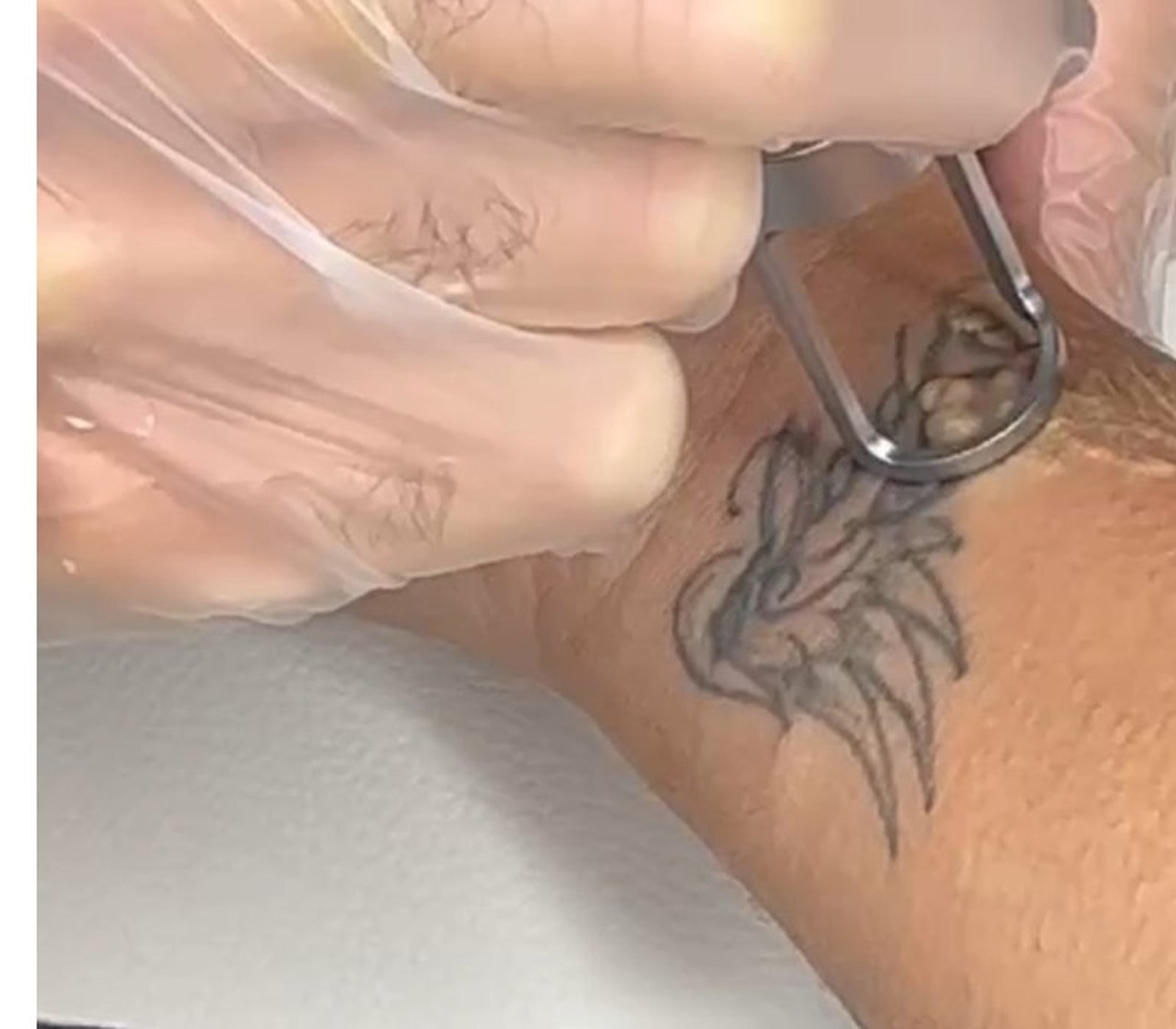
White, blond and red hairs contain little or no melanin: the laser has nothing to aim at. Electrolysis then treats the follicle one at a time, with a fine filament, whatever the colour of the hair.
Because the work is done hair by hair, the session is charged by treatment time. It is the method that takes over from the laser on what remains, or the first choice when the hair is fair.
Depending on the colour of the hair, the area and your skin type, the consultation decides which technique suits — often laser first, then electrolysis for what is left.

Aesthetic medicine and laser — Saint-Rémy-de-Provence. Registered with the French Medical Council (Ordre des médecins).
Page last reviewed 16 September 2026.
The consultation is there to examine your situation, check that there is no contraindication, and tell you whether these techniques are the right answer to what you are asking for.